Service
Continuous Improvement and Business Process Improvement
We do not just report on problems. We help solve them.
Purpose
The documented process and the real process are often not the same thing.
Most businesses already have procedures, systems and ways of working. The problem is that the real work often happens differently.
A procedure might say one thing, but the day-to-day process may rely on workarounds, personal knowledge, old spreadsheets, duplicated checks, informal approvals, unclear handoffs and steps that no longer add value.
That gap is where waste, delay and rework live.
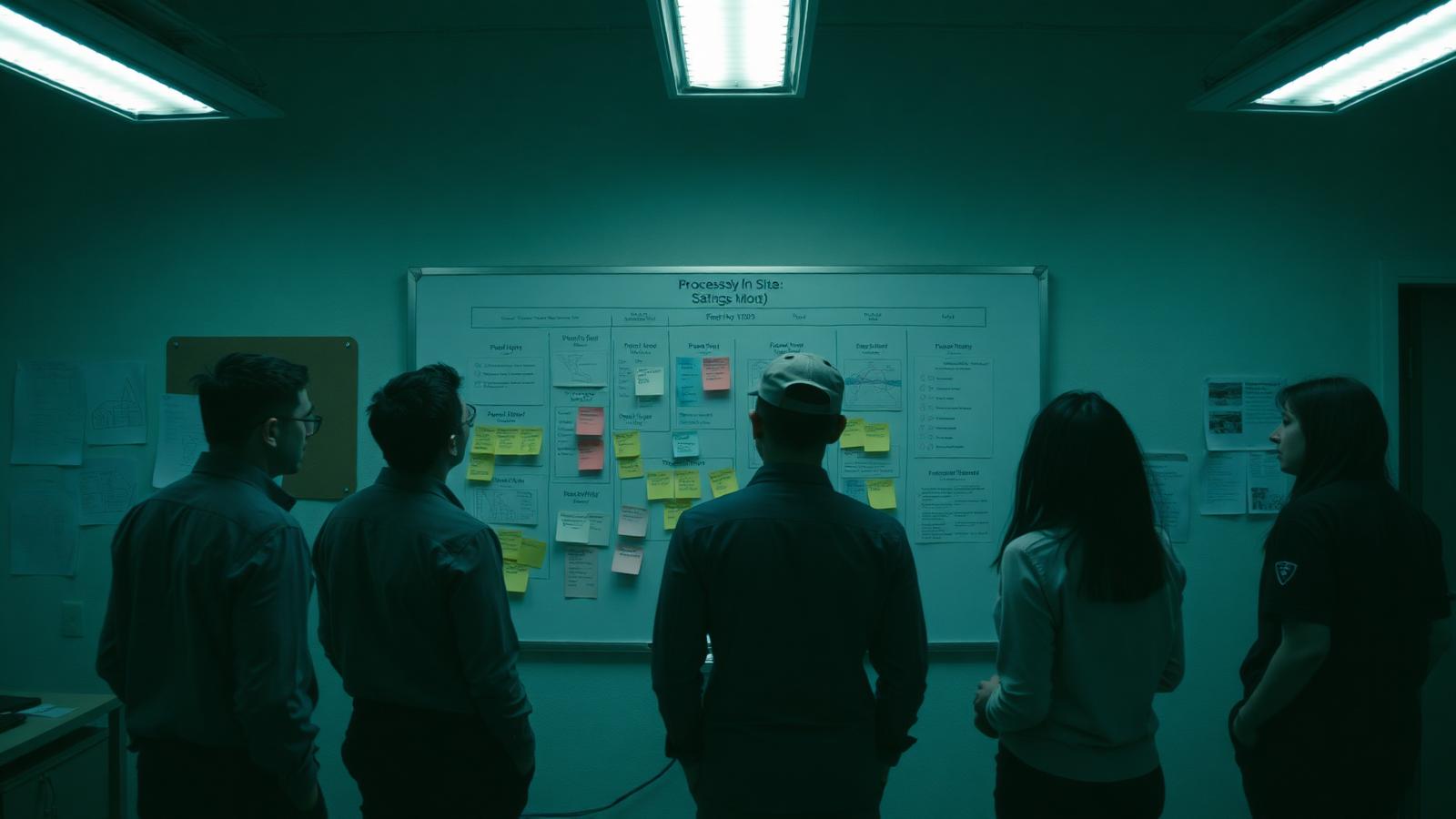
Johnstone Business Intelligence helps organisations understand the real process first. We work with the people closest to the work, map what is actually happening, identify where effort is being wasted, then redesign the process so it is clearer, simpler and easier to follow.
Improvement starts by understanding the work as it is, not as people assume it is.
How it is done
From understanding the current process to embedding the new way.
Continuous improvement is not just a workshop or a process map. It is a practical journey from understanding how work happens today to helping teams adopt a better way of working.
- 01
Observe
Understand the work where it happens, including the informal steps and workarounds.
- 02
Map
Document the current-state process, handoffs, roles, decisions, systems and pain points.
- 03
Analyse
Identify waste, rework, bottlenecks, duplication, variation and unclear ownership.
- 04
Select the right method
Choose the improvement tools that fit the problem, such as Lean, Six Sigma, 5S, Kaizen, root cause analysis or process mapping.
- 05
Redesign
Create a simpler future-state process with clearer steps, roles, handoffs and standards.
- 06
Document
Create practical SOPs, work instructions, checklists and supporting materials.
- 07
Train
Help teams understand the new process, why it changed and how to follow it.
- 08
Embed
Support adoption, review the process and continue improving once the new way is in place.
How it is done — process redesign
A better process starts by seeing the current one clearly.
The first job is not to draw the perfect process. The first job is to understand the current one honestly: what steps exist, which ones add value, where work gets stuck, where people duplicate effort and where procedures no longer match reality.
Current state
Too many steps, loops and unclear decision points
- Process depends on personal knowledge
- Different teams do the same work differently
- Procedures are outdated or ignored
- Approvals are unclear
- Rework is common
- Workarounds are normal
- Training relies on shadowing
- Problems repeat
Future state
Simpler flow, clearer decisions and defined ownership
- Process is mapped and agreed
- Waste and duplication are reduced
- Roles and handoffs are clear
- SOPs and work instructions are practical
- Teams are trained in the new way
- Improvement actions are owned
- Standards are easier to follow
- The process can keep improving
Outcome
You know the process is improving when the work becomes easier to follow, teach and repeat.
- Shorter cycle times
- Less rework
- Less double handling
- Fewer unnecessary handoffs
- Clearer ownership
- Better adoption of the agreed process
- Fewer manual workarounds
- More consistent process execution
- New starters easier to train
- SOPs used in practice
- Actions closed on time
- Bottlenecks identified earlier
- Less reliance on individual memory
- Better alignment between teams
Resources
Keep going with these resources
Blog
Practical articles related to this capability.
Tools
Working tools and templates related to this capability.